Free online quotes Get pricing in minutes
Pittsburgh Precast Concrete
Concrete and asphalt Repair, install, resurface
15 years in service Trusted across Pittsburgh
Precast Concrete Pittsburgh
Pittsburgh’s hillside terrain and freeze-thaw climate make precast concrete one of the most reliable building solutions in the region. From columbarium and niche walls to retaining walls and structural components, precast concrete offers faster installation, tighter quality control, and better long-term performance than many cast-in-place alternatives — especially for the grading and slope-stabilization work common across Pittsburgh’s neighborhoods.
Precast concrete is manufactured off-site in controlled plant conditions, then delivered and installed on location. Because each piece is cast, cured, and quality-checked before it ever reaches the site, Pittsburgh property owners get a more consistent, weather-resistant product with fewer variables than pour-in-place concrete — a real advantage during Pittsburgh’s wet springs and freeze-thaw winters, when curing conditions for site-poured concrete can be unpredictable.
Applications
Common precast applications in Pittsburgh
Precast columbarium and niche walls
Columbarium walls are cast as complete niche modules — cells, dividers, and panel fixings formed together in plant conditions — so every opening matches across a full run. Units are set on a prepared base, waterproofed, then finished with stone cladding, cap stones, and marble or granite fronts ready for engraving.
Precast retaining walls
Precast retaining walls suit Pittsburgh's sloped and hillside lots, holding back soil while drainage is managed behind the wall. Because units arrive cured to full strength, a wall goes up without waiting on formwork or on-site curing, and the dense factory mix resists the freeze-thaw pressure that shifts site-poured walls.
Precast concrete steps and stairs
Precast steps and stairs are cast off-site for consistent strength and finish, then installed quickly with minimal downtime. They're a durable option for sloped Pittsburgh properties, providing safe, code-compliant access between grade changes at homes, businesses, and public walkways.
Precast parking bumpers and barriers
Precast parking bumpers and barriers protect structures, pedestrians, and vehicles in Pittsburgh parking lots and garages. Made from dense, factory-cured concrete, they resist cracking and impact damage far better than poured alternatives, offering a low-maintenance solution for high-traffic commercial areas.
Precast drainage structures and box culverts
Precast drainage structures and box culverts manage stormwater efficiently across Pittsburgh's hilly terrain and clay-heavy soils. Manufactured to precise specifications, they install quickly, resist water infiltration, and provide long-term structural reliability for roadways, site drainage, and utility infrastructure projects.
Precast concrete pads and footings
Precast concrete pads and footings provide a strong, level base for equipment, structures, and utility installations. Cast under controlled conditions, they cure to full strength before delivery, reducing on-site wait time and ensuring consistent load-bearing performance across Pittsburgh job sites.
Precast decorative and landscape units
Precast decorative and landscape units combine durability with design flexibility for Pittsburgh properties. Available in various textures and finishes, these units enhance walkways, garden borders, and hardscape features while maintaining the strength and weather resistance precast concrete is known for.
Our Work
Different Precast Columbarium Projects
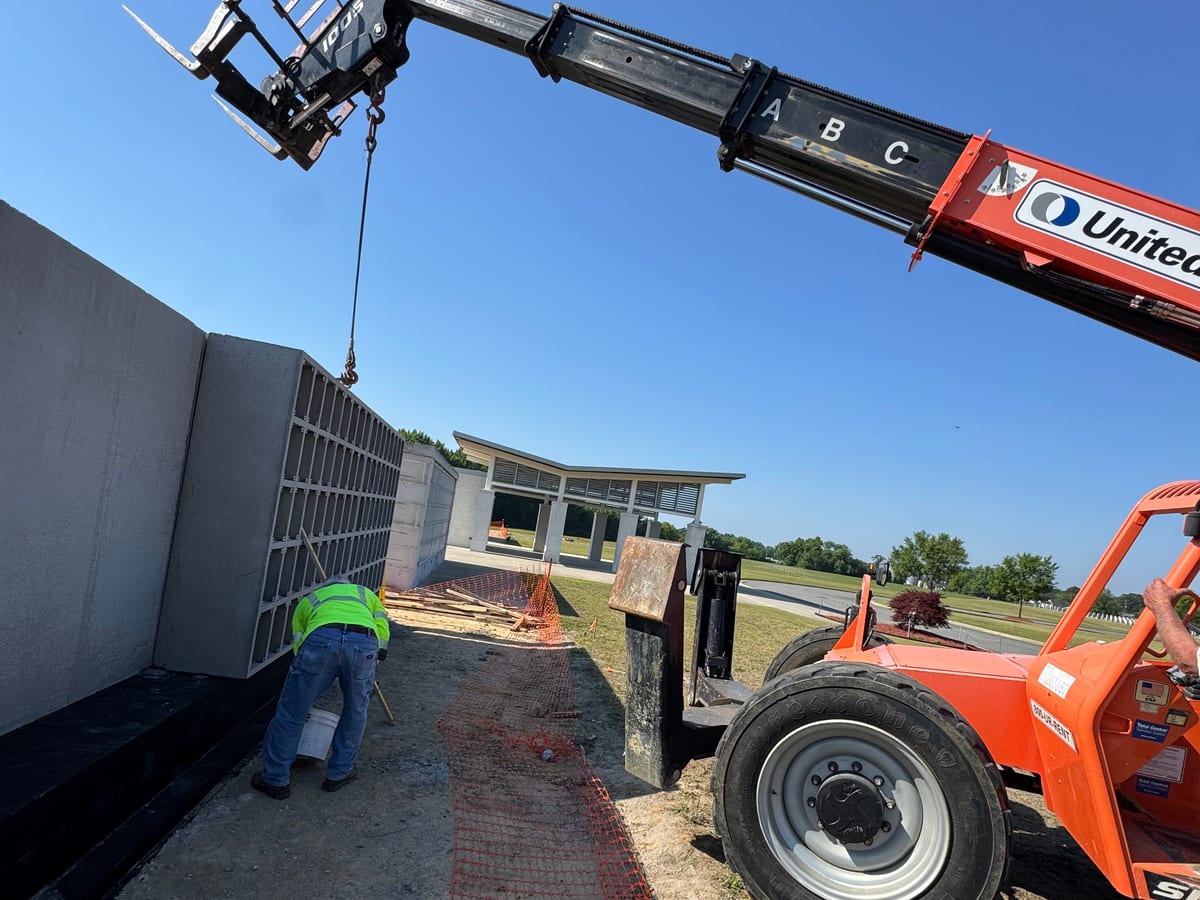
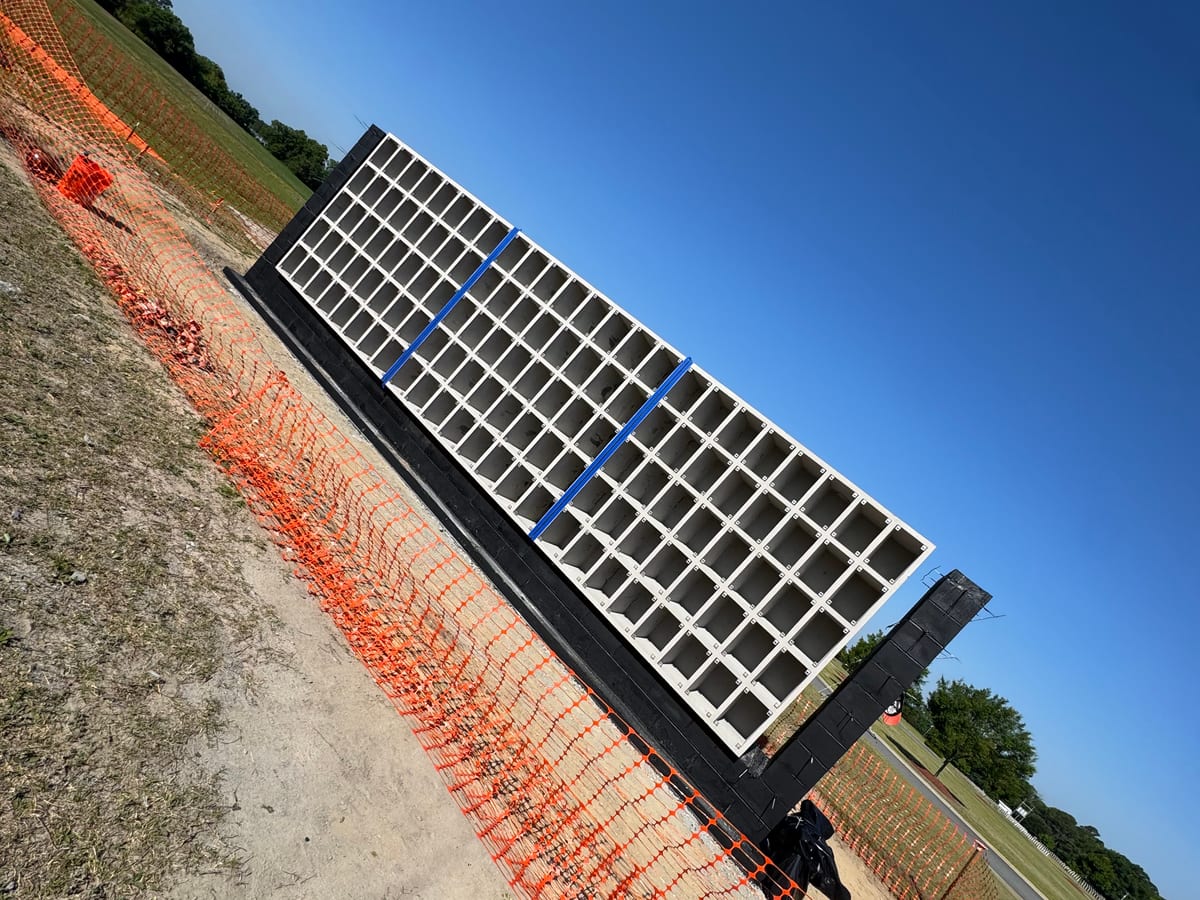
Precast Open-Grid Wall Unit
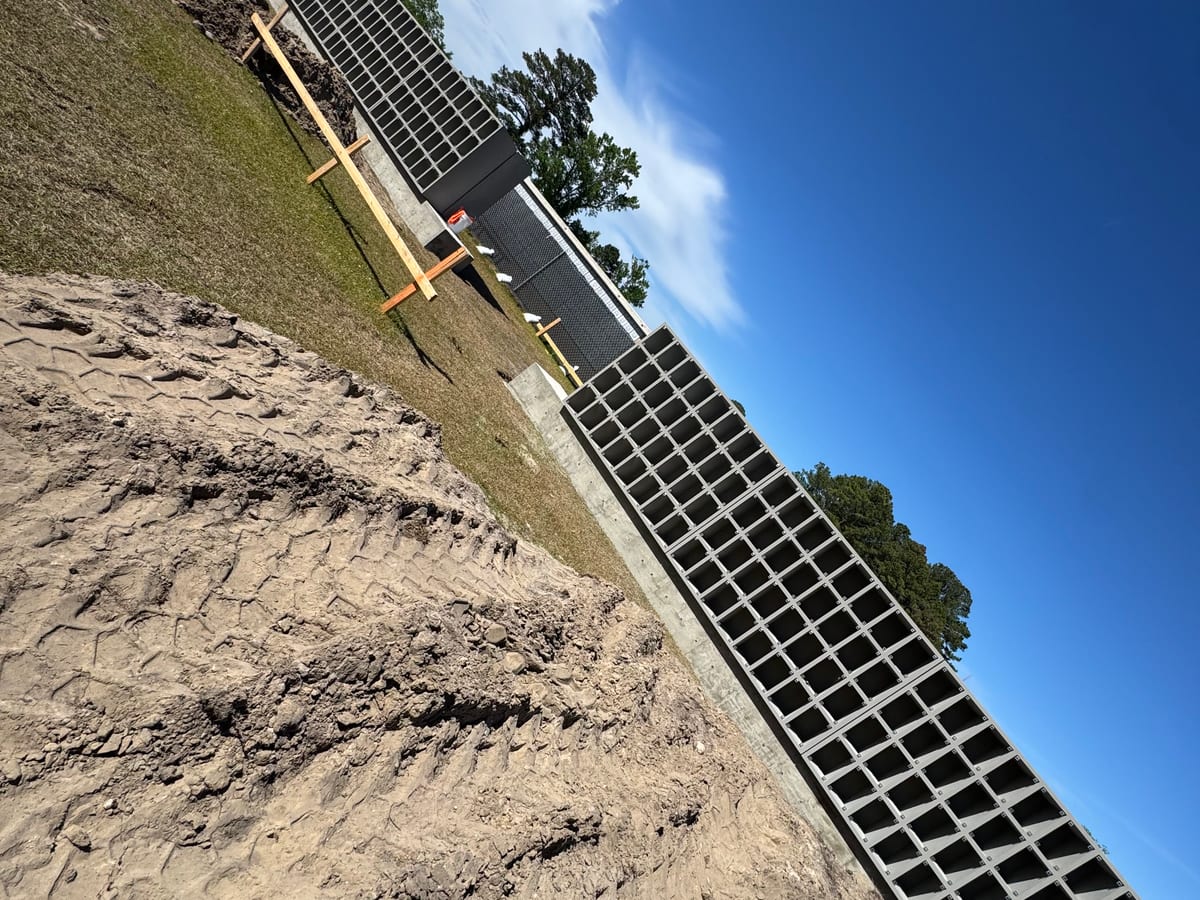
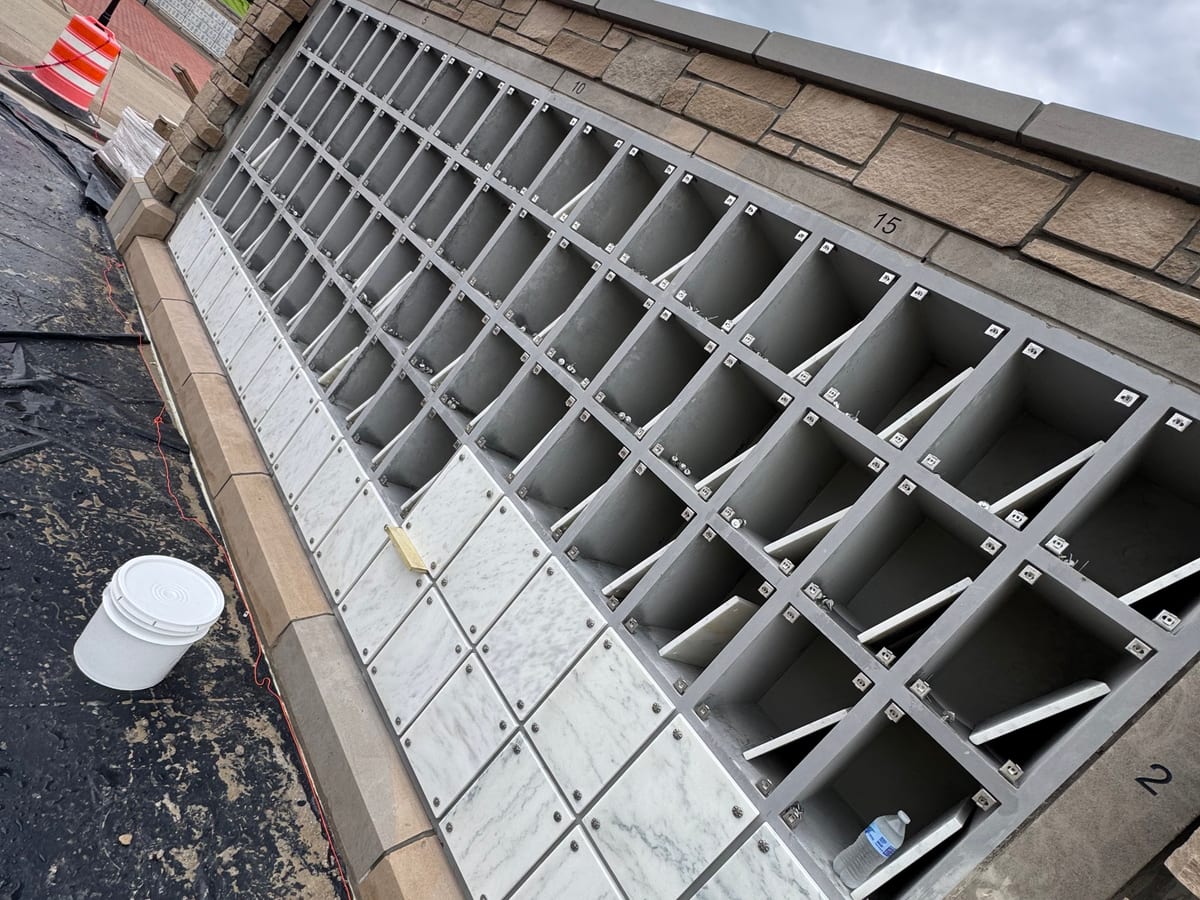
The open-grid wall unit is the building block of a precast columbarium. Each unit is cast as one module with its cells, internal dividers, and panel fixings formed together, which is what gives the finished wall its lattice of uniform openings. Casting the grid as a single piece rather than assembling it on site is the reason every niche in a run comes out the same size and stays square.
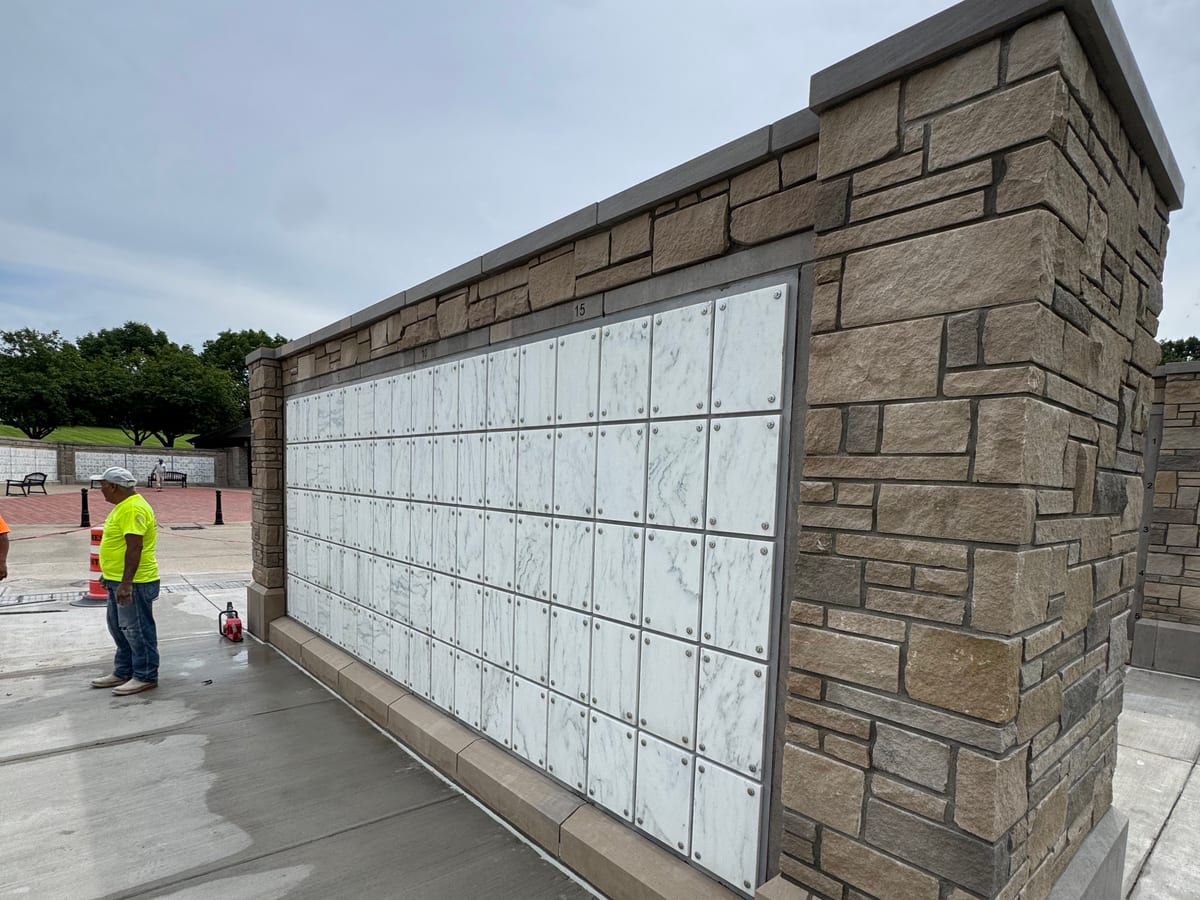
Units are delivered cured to full strength and set onto a prepared concrete base, levelled, and joined into a continuous run. The base is waterproofed, then the structure is dressed — stone cladding to the ends and back, cap stones across the top, and marble or granite fronts fixed to each cell. Because the openings are cast to tight tolerances, those fronts fit flush without cutting or packing on site.
The same unit logic scales: a small memorial wall and a long multi-bay columbarium use the same modules, so capacity can be extended later by adding units to the run rather than rebuilding what is already there.
Why It Works
Advantage of Precast Concrete
Factory-controlled quality
Every unit is cast, cured, and inspected in plant conditions before it ships, so cell dimensions and face alignment stay consistent across an entire columbarium run — something site-poured work struggles to match.
Faster, cleaner installation
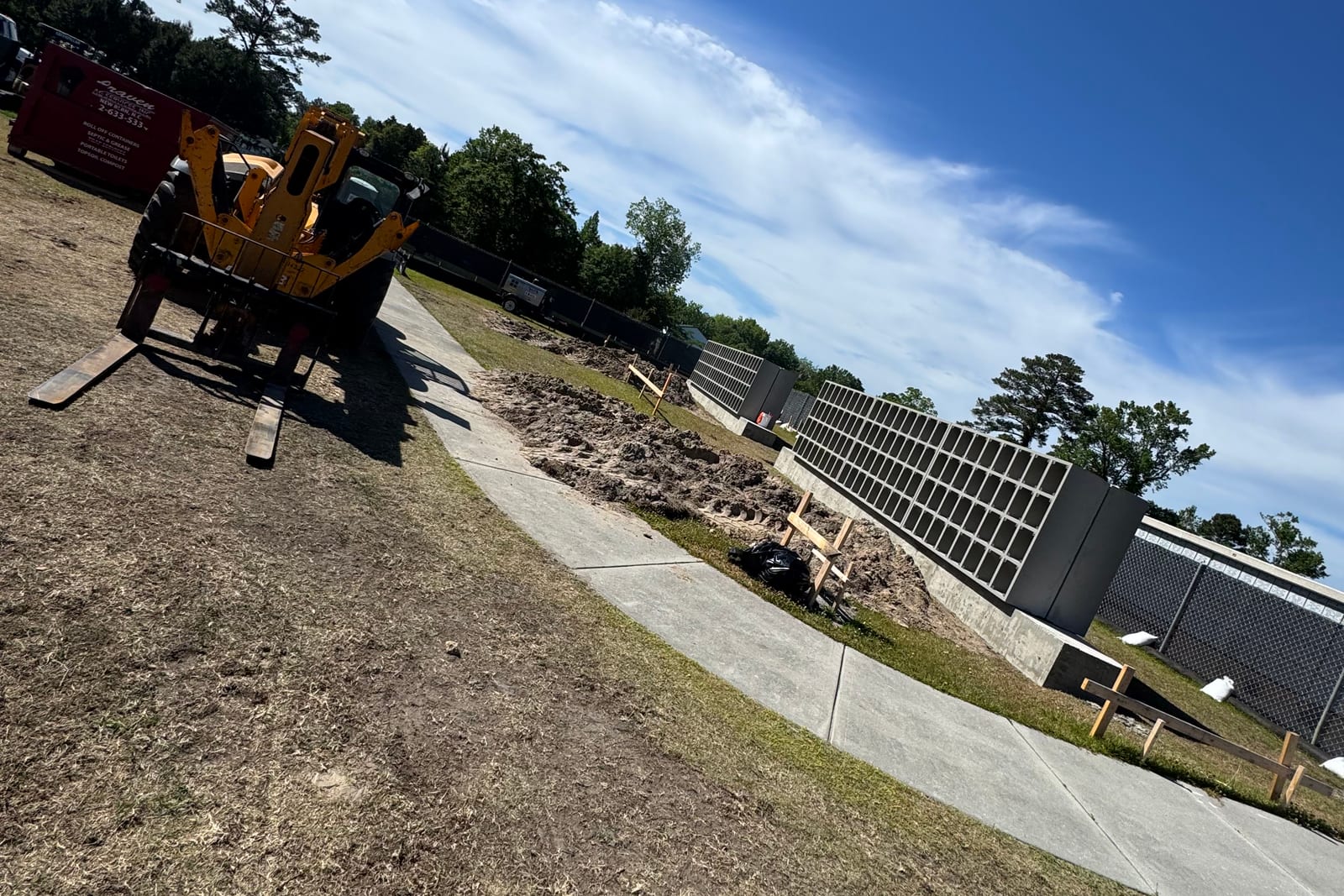
Units arrive cured to full strength and are set with a telehandler, so a wall goes up in days rather than waiting on formwork and on-site curing. Less time on site means less disruption to a working cemetery or memorial grounds.
Precise, repeatable cells
Niche openings are cast to tight tolerances, so front panels, engraved fronts, and hardware fit without on-site adjustment — essential when every cell has to match across a full wall.
Built for Pittsburgh winters
Dense, factory-cured concrete resists the freeze-thaw cycling and moisture ingress that cause spalling, so the structure and its finish hold up decade after decade.
Precast Concrete Columbariums: Durable, Dignified Construction
A columbarium is built to stand for generations, which makes precast concrete the natural choice. Each niche unit is cast as a single module in plant conditions — cells, dividers, and mounting points formed together — then cured to full strength and quality-checked before it ever reaches the site. That off-site control is what keeps every cell dimensionally consistent, so front panels sit flush and engraving lines up across an entire wall.
On site the units are set onto a prepared concrete base with a telehandler, waterproofed at the base, then finished with stone cladding, cap stones, and the marble or granite fronts that carry the inscriptions. Because the structural work arrives cured, installation is measured in days rather than weeks — a real consideration on active memorial grounds where access and quiet matter.
Precast also answers the long-term problem: dense, factory-cured concrete resists the freeze-thaw cycling, salt, and moisture that cause spalling and staining on Pittsburgh-area structures. The result is a memorial that stays square, sealed, and dignified for decades with very little maintenance.
Precast vs Poured
Why Choose Precast Over Poured Concrete
Consistent quality
Cast under controlled conditions, not weather-dependent.
Faster project timelines
No on-site curing wait before load-bearing.
Lower long-term maintenance
Dense, factory-cured concrete resists cracking and spalling.
Design flexibility
Modular components adapt to steps, walls, drainage, and more.
Cost efficiency on larger jobs
Reduced labor and form-work costs on site.
The Process
Our Precast Concrete Process in Pittsburgh
01 Site assessment
We evaluate slope, soil, and drainage conditions.
02 Design and engineering
Sizing and layout for load and grade requirements.
03 Material delivery
Precast units delivered to your Pittsburgh site.
04 Installation
Units set, levelled, joined into a run and secured.
05 Final grading and finishing
Site cleanup and surface finishing.
FAQ
Precast Concrete FAQs
How long does precast concrete installation take?
Because the units arrive cured to full strength, most precast projects in Pittsburgh are set in a few days to two weeks depending on size, unit count, and site access — considerably faster than a comparable cast-in-place structure, which has to wait on formwork and curing before it can carry load.
Is precast concrete good for Pittsburgh's hillside lots?
Yes. Sloped and uneven sites are exactly where precast pays off: steps, walls, pads, and drainage structures arrive dimensionally accurate and are set in place, so there is no forming or pouring on a grade where access and curing conditions are difficult to control.
Does precast concrete hold up to Pittsburgh winters?
Precast concrete is factory-cured to high strength specifications, giving it strong resistance to the freeze-thaw cycles typical of Pittsburgh winters.
How is a precast columbarium finished?
The niche modules are the structure; the finish goes on afterwards. Once units are set and waterproofed at the base, they are clad in stone, topped with cap stones, and fitted with marble or granite fronts that are engraved as niches are used. Because the cells are cast to tight tolerances, those fronts sit flush without on-site adjustment.
Keep Exploring
Related Concrete Services & Areas
ServiceRetaining Wall Pittsburgh
We built all types of retaining walls Pittsburgh such as timber walls, block walls, stone walls, and more. Contact 412 900 4557 for a free estimate.
Read more ServicePittsburgh Foundation ContractorsConcrete foundation installation and repair in Pittsburgh, PA — footings, slabs, and foundation walls built for the region's soil. Call 412 900 4557.
Read more ServicePittsburgh ExcavationExcavation contractors in Pittsburgh, PA — site clearing, foundation digs, trenching, grading, and material removal for residential and commercial projects. Call 412 900 4557.
Read more Concrete Driveway Pittsburgh
Get Your Free Pittsburgh Concrete Quote
Written fixed-price quotes. All permits handled. 5-year workmanship warranty. Free on-site visit.