Free online quotes Get pricing in minutes
Why Is My Concrete Driveway Cracking Every Winter?
Concrete and asphalt Repair, install, resurface
15 years in service Trusted across Pittsburgh
Why Your Driveway Cracks Every Winter
Your concrete driveway cracks every winter because water works its way into small pores and hairline cracks in the surface, then freezes and expands roughly 9% in volume, physically pushing the crack a little wider — and it happens again every time the temperature crosses freezing. This is called a winter freeze cycle, and Pittsburgh gets dozens of them each winter. A crack that was barely visible in November can be noticeably wider by March, simply from repeated winter expansion rather than any new damage occurring.
The Winter Freeze Cycle, Explained
Concrete is porous at a microscopic level, and even a well-built driveway absorbs some moisture from rain, snowmelt, and humidity. When that trapped water freezes, it expands and pushes outward against the surrounding concrete. If there's already a small crack, joint, or weak spot, the ice acts like a wedge, widening it slightly. As temperatures rise, the ice melts, more water seeps in, and the next freeze widens it again. Repeat that process thirty-plus times in a single Pittsburgh winter and you get exactly what most homeowners see: cracks that seem to "appear overnight" but are really the visible result of a slow mechanical process that's been running under the surface all season.
Why Some Driveways Crack More Than Others
Not every driveway suffers equally, and the difference usually comes down to a few factors:
Sealing. An unsealed or poorly sealed driveway absorbs far more water than a properly sealed one, which means more material available to freeze and expand. Sealing is the single most effective preventive step against winter freeze cracking.
De-icing salt. Road salt lowers the freezing point of water, which sounds like it should help — but it also increases the number of freeze cycles a driveway experiences by causing water to refreeze at temperatures that would otherwise stay solid ice. Salt also chemically attacks the concrete surface, accelerating scaling and spalling.
Base and drainage. A driveway with poor drainage holds standing water against and underneath the slab longer, giving it more opportunity to seep in before it runs off. A driveway that was poured without proper base compaction is also more prone to the kind of settling that creates cracks the winter freeze cycle can then widen.
Concrete mix. Air-entrained concrete — mixed with microscopic air bubbles that give water room to expand without cracking the surrounding material — resists winter freeze damage far better than a standard mix. Older driveways, or ones poured without a winter-grade specification, are much more vulnerable.
Age and existing damage. Once a crack exists, it becomes the path of least resistance for water. Small, unaddressed cracks reliably become bigger cracks the following winter, and then structural damage the winter after that.
What You Can Do About It
Seal your driveway on a regular schedule. A quality penetrating sealer reapplied every two to three years dramatically reduces how much water gets into the surface in the first place.
Address cracks while they're small. A hairline crack costs very little to seal now. The same crack, left through two or three more winters, can turn into a repair that requires patching or leveling.
Improve drainage where water pools. If you notice standing water on or near your driveway after rain, correcting the grade or adding drainage prevents water from sitting against the slab in the first place.
Use calcium-chloride-based de-icers instead of rock salt where possible — they're gentler on concrete and reduce the chemical scaling that rock salt causes.
Have a professional assess anything beyond hairline cracking. Cracks that are wide, uneven, or running the full depth of the slab usually indicate the base has already shifted, and sealing alone won't fix that.
When to Call a Professional
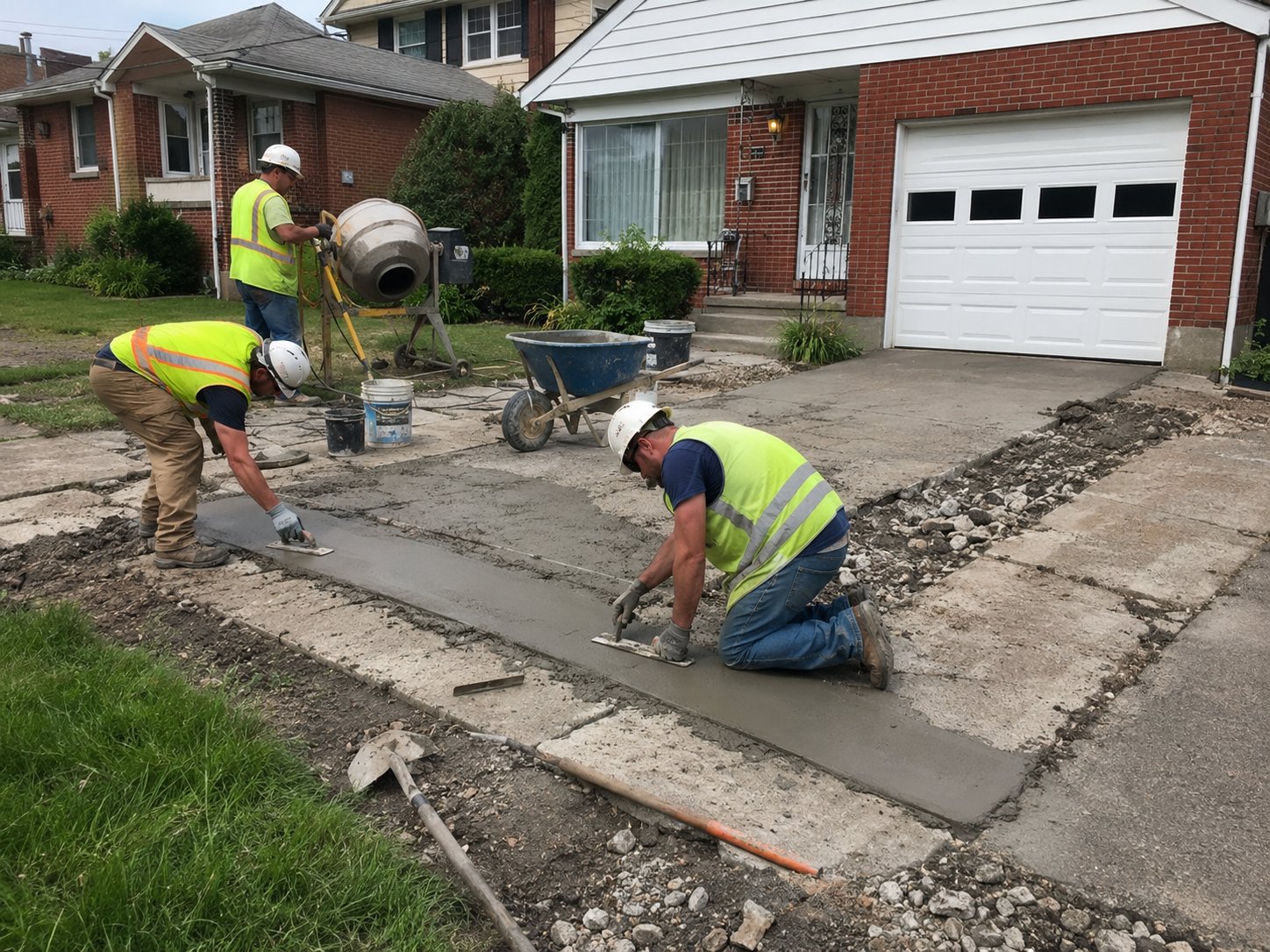
A few hairline cracks each winter are normal wear for any concrete driveway. It's time to call someone when cracks are wider than about a quarter inch, when you see multiple parallel cracks or a spreading network of cracks, or when a section of the driveway has visibly sunk or heaved. Those are signs the damage has moved from cosmetic to structural, and further winter freeze cycles will only make the eventual repair more expensive.
If your driveway is showing more than surface-level wear, we'll take a look for free, tell you honestly whether it needs repair or just a good sealing, and put a fixed price on the fix before any work starts.
Keep Exploring
Related Concrete Services & Areas
ServicePittsburgh Concrete Driveway Repair
Upgrade your home with a durable and visually appealing concrete driveway in Pittsburgh. Expert installation for lasting quality and curb appeal. Call 412
Read more ServiceConcrete Sealer PittsburghConcrete Sealer Pittsburgh – Protect, level, and restore your concrete! Expert sealing and repairs for lasting durability. Call 412 900 4557 for a free quo
Read more Concrete Driveway Pittsburgh
Get Your Free Pittsburgh Concrete Quote
Written fixed-price quotes. All permits handled. 5-year workmanship warranty. Free on-site visit.