Free online quotes Get pricing in minutes
Best Concrete Driveway Sealer for Pittsburgh Weather
Concrete and asphalt Repair, install, resurface
15 years in service Trusted across Pittsburgh
Should I Seal My Driveway?
If your concrete driveway sees Pittsburgh winters, yes — and a penetrating silane-siloxane sealer is generally the best choice, since it soaks into the concrete rather than sitting on top of it, blocking water and de-icing salt from getting in without changing the surface’s look or slip resistance. Decorative acrylic sealers have their place for stamped or colored concrete, but for a plain broom-finish driveway that just needs to survive freeze cycles and road salt, a penetrating sealer is the one that actually earns its keep.
Sealer Types Compared
| Sealer Type | Best For | Typical Lifespan |
|---|---|---|
| Penetrating silane-siloxane | Plain driveways facing freeze cycles and road salt | 3–5 years |
| Acrylic topical | Adding sheen or slight color enhancement to a plain slab | 1–3 years |
| Epoxy / polyurethane | Stamped, colored, or decorative concrete needing a durable topcoat | 5–10 years, but requires more prep and reapplication skill |
Why Penetrating Sealers Win for Pittsburgh Driveways
A penetrating sealer soaks into the concrete rather than forming a film on top of it, which means it doesn't peel, doesn't get slippery when wet, and keeps the driveway's natural look and slip resistance intact. That penetration is exactly what matters most for a Pittsburgh driveway: it blocks water and dissolved road salt from soaking into the concrete's pores, which addresses the two biggest causes of winter damage — freeze-cycle cracking and salt-driven scaling — at the same time. Topical acrylic and epoxy sealers look great and have their place, especially on stamped or colored concrete where appearance matters as much as protection, but they generally don't hold up as well to repeated freeze cycles as a good penetrating sealer does on a plain broom-finish driveway.
How Often Should You Reseal?
Most Pittsburgh driveways need resealing every two to three years. Heavier winters with more freeze cycles, frequent de-icing salt use, or a driveway with more direct sun exposure can shorten that window; a driveway that sees light use and mild winters can sometimes stretch closer to four years between applications. The simplest test: if water no longer beads up on the surface and instead soaks in, it's time to reseal regardless of exactly how long it's been.
Should You Seal Your Driveway?
If your driveway is in Pittsburgh and sees any winter weather, the answer is almost always yes — sealing is the least expensive, most effective step you can take to extend its life. The only real exception is a driveway scheduled for resurfacing or replacement in the near term, where sealing the existing surface wouldn't be worth the cost.
DIY vs. Professional Sealing
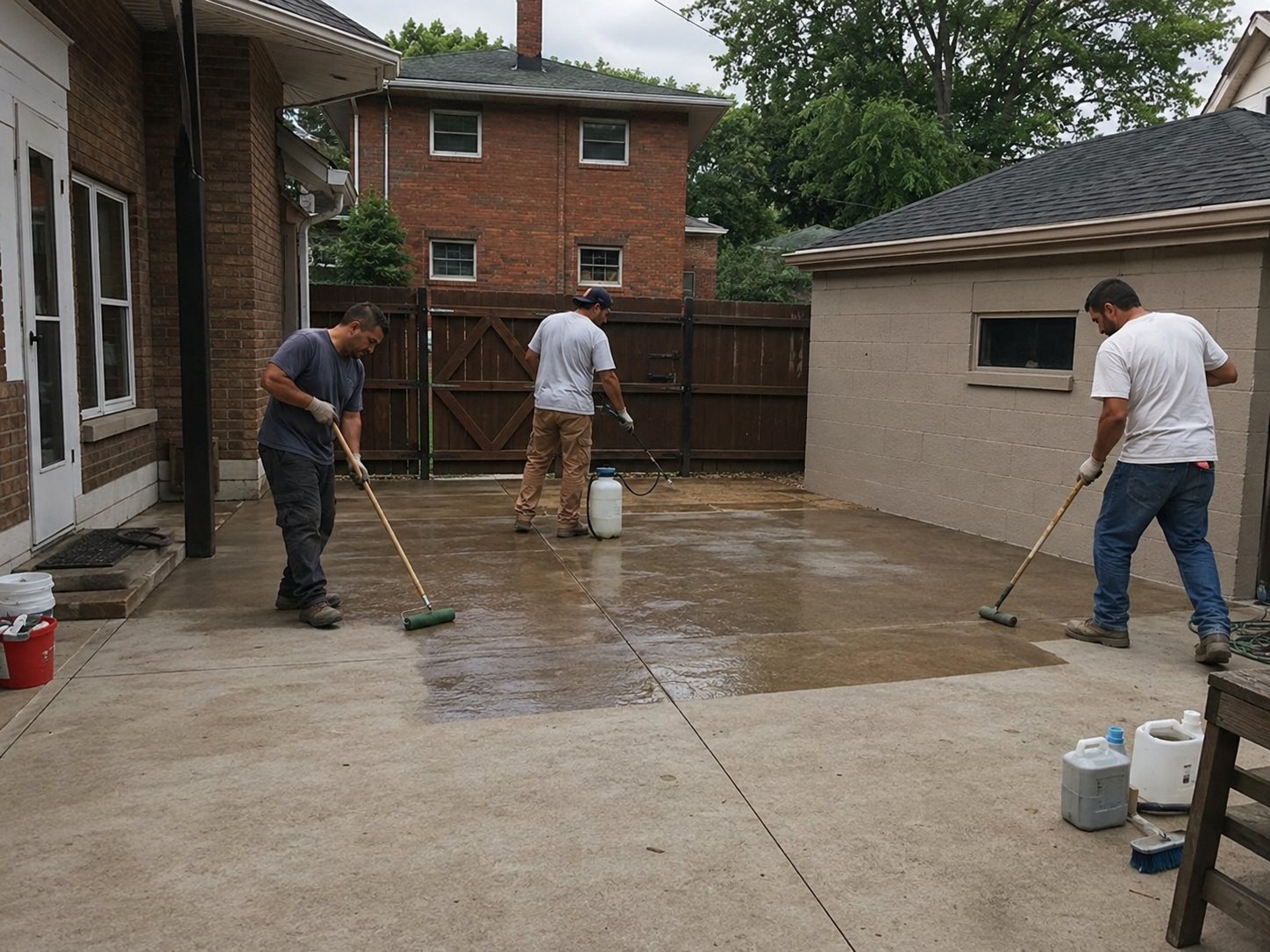
DIY sealing can work for a small, easily accessible driveway if you're comfortable with surface prep — cleaning, degreasing, and letting the concrete dry fully before application matters more than the sealer itself for how long the job lasts. Professional application typically costs more upfront but includes proper surface prep, even coverage without lap marks or missed spots, and the right product for your specific concrete finish, which usually pays for itself in how much longer the seal job actually lasts.
Get Your Driveway Sealed Right
We'll assess your driveway's current condition, recommend the sealer type that actually fits your finish and exposure, and apply it correctly the first time. Call us for a free on-site quote on concrete sealing anywhere in the Pittsburgh area.
Keep Exploring
Related Concrete Services & Areas
ServiceConcrete Sealer Pittsburgh
Concrete Sealer Pittsburgh – Protect, level, and restore your concrete! Expert sealing and repairs for lasting durability. Call 412 900 4557 for a free quo
Read more GuideWhy Is My Concrete Driveway Cracking Every Winter?Why concrete driveways crack every winter in Pittsburgh, what winter freeze damage looks like, and how to stop it from getting worse. Call 412 900 4557.
Read more Concrete Driveway Pittsburgh
Get Your Free Pittsburgh Concrete Quote
Written fixed-price quotes. All permits handled. 5-year workmanship warranty. Free on-site visit.